Furniture scratching is the most common behavioral complaint among cat owners worldwide. According to the American Society for the Prevention of Cruelty to Animals, scratching related furniture destruction is one of the leading reasons cats are surrendered to shelters — making effective humane scratching redirection one of the most genuinely important behavioral skills any cat owner can develop for maintaining a lasting positive relationship with their feline companion. How to stop your cat scratching furniture is a question that most cat owners approach with punishment based responses that are scientifically proven to be ineffective and that damage the trust relationship between cat and owner without resolving the underlying scratching behavior at all.
The fundamental truth about cat scratching that changes everything about how you approach the problem is this — your cat is not misbehaving. They are doing exactly what their biology compels them to do and what they would do in any environment without appropriate alternatives. Scratching is not a choice cats make to annoy their owners — it is an involuntary behavioral need as fundamental to feline wellbeing as eating and sleeping. Understanding this transforms your approach from futile punishment to effective redirection that actually solves the problem permanently.
Why Cats Scratch — Understanding the Root Cause?
Effective scratching redirection requires understanding exactly why cats scratch — because the solution must address the actual need rather than simply attempting to suppress behavior that will always find expression somewhere.
Claw maintenance — Scratching removes the dead outer sheath of claws naturally — the equivalent of nail filing that keeps claws sharp, healthy, and at appropriate length. This maintenance need occurs regularly regardless of what scratching surface is available — the only variable is which surface receives the scratching.
Muscle conditioning — The full body stretching extension that vigorous scratching involves engages and conditions the forelimb shoulder and back muscles that cats use for climbing hunting and jumping. This physical conditioning need is served by scratching surfaces tall enough for complete vertical extension — one of the most important specifications for effective scratching post selection.
Territory marking — Cats have scent glands between their paw pads that deposit scent during scratching — marking territory as claimed and familiar through olfactory signals that communicate territorial ownership to other cats. The visual scratch marks left on surfaces serve the same communicative territorial marking function visually. This territorial marking need is served most effectively by scratching in visible prominent locations — which is why cats consistently choose the most visible furniture pieces rather than hidden alternatives.
Stress and anxiety relief — Vigorous scratching releases endorphins and provides a physical outlet for anxiety stress and excess energy that cats accumulate through indoor sedentary living. Cats under stress scratch more vigorously and more frequently — making scratching behavior a useful stress indicator alongside the furniture destruction it causes.
Pleasure — Cats find scratching genuinely pleasurable — the physical sensation of claw engagement in resistant fibrous material satisfies in a way that makes scratching on appropriate surfaces genuinely enjoyable rather than merely functional. Providing surfaces that deliver this pleasurable sensation more effectively than your furniture is the core strategy of effective scratching redirection.
Why Punishment Does Not Work?
Before addressing effective solutions it is worth understanding definitively why punishment based approaches consistently fail — so you can redirect your energy toward techniques that actually produce lasting results.
Cats do not associate delayed punishment with specific behaviors — if you find scratched furniture and punish your cat minutes or hours after the scratching occurred your cat has no ability to connect the punishment with the scratching behavior. They experience the punishment as random and unpredictable — increasing anxiety rather than reducing scratching and damaging the trust relationship without any behavioral improvement.
Even immediate punishment during scratching only teaches cats to avoid scratching when you are present — not to stop scratching entirely. Cats learn to scratch when you are not watching rather than learning that scratching is inappropriate — producing a cat that scratches more rather than less and is now additionally stressed by the unpredictable punishment that appears when you happen to be present.
Punishment increases stress and anxiety — the primary emotional driver of excessive scratching behavior. Punishing scratching creates more anxiety that produces more scratching in a worsening cycle that punishment based approaches consistently generate rather than resolve.
How to stop your cat scratching furniture? The Effective Solution — Redirection Not Suppression
The only approach that produces genuine lasting scratching behavior change is redirection — making appropriate scratching surfaces more appealing than furniture alternatives rather than attempting to suppress the scratching need that will always find expression somewhere.
Effective redirection has three components that must all be implemented together for reliable results — appropriate scratching surfaces that cats genuinely prefer, strategic placement that addresses territorial and convenience factors, and furniture protection that makes furniture scratching less rewarding while appropriate alternatives are being established.
Step 1 — Choose the Right Scratching Surfaces
The scratching post or surface you provide must be genuinely more appealing to your cat than your furniture — not merely adequate. Most cheap scratching posts fail at furniture redirection because they are less appealing than the furniture they are supposed to replace. Here is what makes scratching surfaces genuinely preferred by cats:
Height — The single most important specification. Your scratching post must be tall enough for your cat to scratch at full vertical extension — arms fully extended overhead in the complete stretch that makes scratching physically satisfying. Most cats need a minimum of 28–32 inches. Posts shorter than this force cats into cramped positions that your full height furniture does not — making furniture consistently more appealing than the post regardless of surface material.
Stability — A post that wobbles or tips during vigorous scratching frightens cats and leads to permanent avoidance after one unsteady experience. Test any scratching post by pushing firmly from the side — it should not move at all under hand pressure. A post that moves under your hand will certainly topple under your cat’s full weight during vigorous extended scratching.
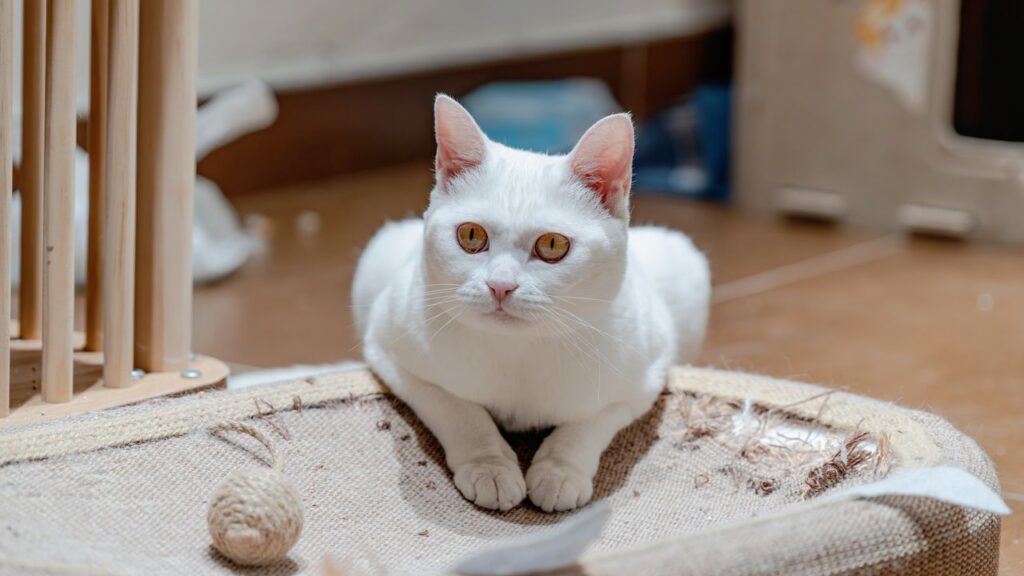
Sisal material — Quality sisal rope is the scratching material that cats most consistently prefer over all other options including carpet fabric and cardboard. The rough fibrous texture engages claws in the catching pulling motion that delivers the physical sensation cats find most satisfying during scratching — superior to the smooth resistance of furniture upholstery despite what the damage your furniture sustains might suggest.
The single most effective solution to furniture scratching is providing scratching surfaces your cat genuinely prefers over your furniture. Check out our complete guide to the best cat scratching posts under $50 for the most effective and highly rated scratching post options that cats consistently prefer over furniture alternatives.
Step 2 — Place Scratching Posts Strategically
A scratching post in the wrong location will be ignored regardless of its quality — placement is as important as the post itself for successful furniture redirection.
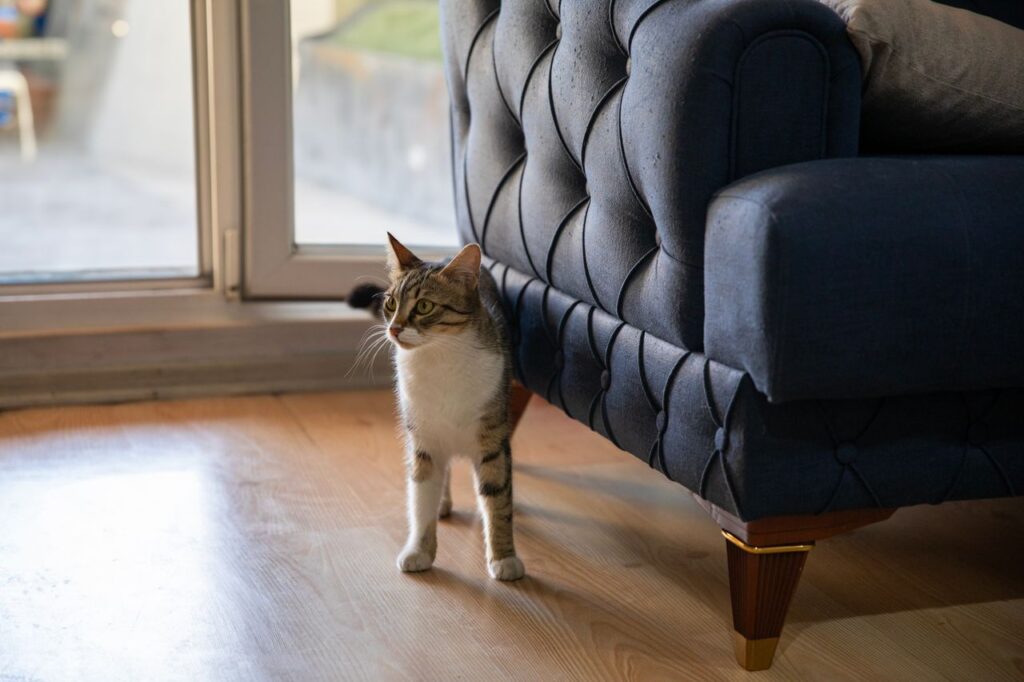
Place posts where scratching currently happens — not where you want scratching to happen. If your cat scratches the sofa arm the replacement scratching post must be positioned immediately beside or in front of that sofa arm initially. The territorial marking function of scratching means cats return to established scratching locations — you must bring the appropriate alternative to the location rather than hoping your cat will seek out a distant alternative.
Place posts in socially significant locations — cats preferentially scratch in locations where their territorial marks are most visible and socially meaningful. Living rooms, entry areas, and sleep locations all represent high value territorial marking sites that cats prioritize for scratching. Scratching posts hidden in spare rooms or isolated corners fail to satisfy the territorial visibility that motivates furniture scratching in prominent locations.
Provide multiple scratching surfaces — one post is rarely sufficient for complete furniture protection in multi room homes. A scratching surface in each room where furniture scratching occurs prevents the single post from becoming inadequate territory coverage that sends cats back to furniture in the unprotected rooms.
Step 3 — Make Furniture Less Appealing
While establishing appropriate scratching alternatives temporarily making furniture less appealing accelerates redirection by steering cats toward the preferred alternatives during the establishment period.
Double sided tape applied to furniture scratching locations creates a tactile experience cats find unpleasant — the stickiness on their paws during scratching immediately discourages continued contact with that surface. Remove the tape once the scratching post has been established as the preferred alternative — typically within 2–4 weeks of consistent post use.
Furniture covers and throws over scratching target areas temporarily remove the texture that makes specific furniture pieces attractive scratching targets — smooth fabric covers are significantly less appealing scratching surfaces than the upholstery textures that most furniture provides. Remove covers once the post is established.
Citrus scented sprays applied to furniture scratching locations deter many cats through the strong citrus odor that most cats find actively unpleasant — creating an olfactory deterrent that redirects approach toward the unscented scratching post alternative. Reapply every few days as the scent fades.
Step 4 — Encourage Post Use Through Positive Reinforcement
Once appropriate scratching posts are in place actively encourage their use through positive reinforcement that strengthens the association between post use and positive outcomes.
Sprinkle dried catnip on and around new scratching posts to create an attractant that draws cats to investigate and engage with the post — the catnip response motivating initial contact that familiarizes cats with the post’s texture and location. Not all cats respond to catnip but approximately 70% show the enthusiasm that makes it an effective initial introduction tool.
Reward post use immediately and enthusiastically — treats verbal praise and affectionate attention delivered within seconds of observing your cat use their scratching post creates positive reinforcement that strengthens the behavior through pleasant association. Cats respond to positive reinforcement — the more pleasant post use experiences accumulate the more reliably cats return to the post.
Play around the scratching post using wand toys and interactive play that brings cats into regular contact with the post’s location and surface — cats who regularly play in the vicinity of their scratching post discover and begin using it more reliably than cats who have minimal exposure to the post area during daily activity.
Step 5 — Consider Nail Caps as a Temporary Solution
Soft nail caps — small rubber coverings glued over individual claws — prevent furniture damage during the redirection establishment period without interfering with normal scratching behavior. Cats continue scratching normally with nail caps in place but the capped claws cannot penetrate upholstery surfaces and create the damage that bare claws produce.
Nail caps last approximately 4–6 weeks before falling off naturally as claws grow and must be replaced — creating ongoing application sessions that some cats tolerate and others resist. They represent an effective temporary solution during the post establishment period rather than a permanent resolution that addresses the underlying behavioral need.
Nail cap application can be performed at home following manufacturer instructions or by a veterinarian or groomer for cats who resist the process — the cost and involvement of professional application makes home application preferable for cooperative cats.
Step 6 — Address Underlying Stress
Cats that scratch excessively despite appropriate scratching post availability are often communicating stress and anxiety that scratching helps them manage. Identifying and addressing stress sources produces behavioral improvement that surface level redirection alone cannot achieve in genuinely anxious cats.
Common stress sources in indoor cats include environmental changes such as new furniture, new household members, construction noise or renovation, change in routine, introduction of new pets, and insufficient environmental enrichment that leaves cats under stimulated and anxious throughout the day.
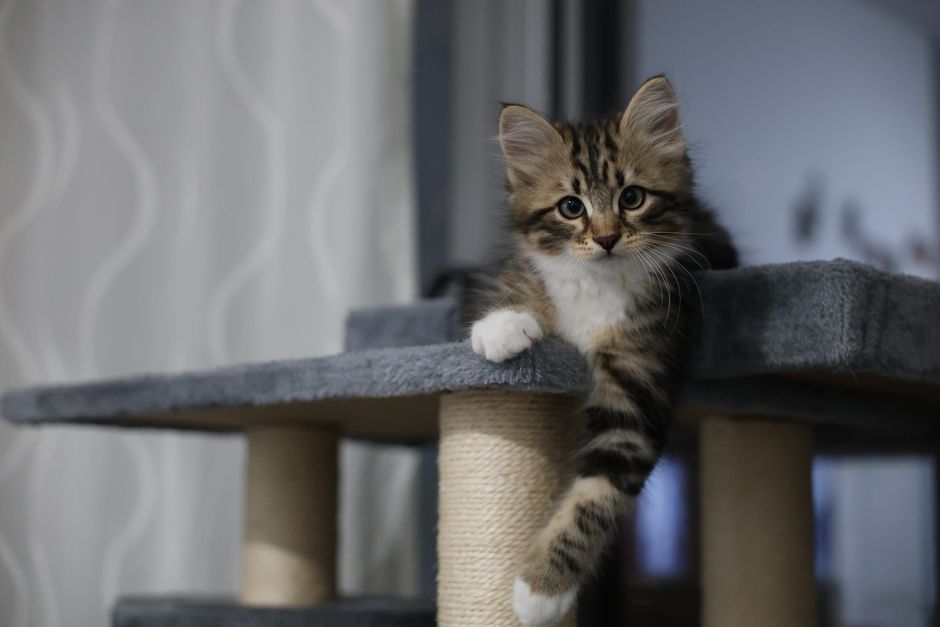
Provide adequate environmental enrichment — window perches for outdoor observation, regular interactive play sessions, puzzle feeders that engage natural hunting behavior, and cat trees that provide territory, climbing, and scratching opportunities simultaneously. A cat whose physical environmental and behavioral needs are comprehensively met is significantly less likely to engage in destructive furniture scratching than one whose needs are inadequately addressed.
What Definitely Does Not Work?
Declawing — The surgical removal of claw producing tissue is a painful irreversible procedure that removes the cat’s primary defense mechanism, causes lasting physical discomfort, and frequently produces worse behavioral problems than the scratching it was intended to solve. Declawing is illegal in many countries and condemned by veterinary associations worldwide. Never consider it as a scratching solution.
Punishment — For the reasons detailed earlier in this guide — ineffective delayed association, punishment avoidance learning, stress increase — punishment approaches consistently make scratching problems worse rather than better and damage the human cat relationship without producing any behavioral improvement.
Removing all scratching opportunities — Cats whose scratching needs are completely frustrated through removal of all scratching opportunities develop increased anxiety and stress that eventually finds expression in scratching behavior more destructive than the original problem or in other behavioral problems that represent the stress seeking outlet that completely blocked scratching creates.
Timeline for Success
Realistic expectations help maintain the consistency that successful redirection requires through the establishment period before reliable results appear.
Week 1–2 — Initial post placement and furniture deterrent application. Some cats begin using new posts immediately while others investigate slowly. Continue consistent positive reinforcement of any post contact.
Week 2–4 — Most cats establish regular post use during this period with consistent positive reinforcement and strategic placement. Furniture scratching typically decreases noticeably but may not eliminate completely.
Week 4–8 — Established post users reliably prefer their scratching posts to furniture alternatives. Furniture deterrents can begin phasing out as post preference becomes habitual.
Month 3 onwards — Post use is habitual and furniture scratching is minimal or eliminated entirely in most cases where appropriate posts are strategically placed and positively reinforced consistently throughout the establishment period.
Providing a quality cat tree alongside dedicated scratching posts addresses multiple feline needs simultaneously — check out our complete guide to the best cat trees under $50 for affordable options that give cats climbing perching and additional scratching surfaces all in one structure. For dog owners wondering about the safest walking equipment for their canine companions check out our complete comparison of dog harness vs collar to understand which option is safer more comfortable and more effective for your specific dog’s needs and walking style.