Knowing how to keep your cat happy and healthy indoors is the most important obligation that choosing an indoor lifestyle for your cat creates. According to the American Association of Feline Practitioners, indoor cats who receive adequate environmental enrichment appropriate nutrition regular veterinary care and sufficient daily interaction with their owners live significantly longer healthier lives than both outdoor cats and under-enriched indoor cats — making the quality of the indoor lifestyle as important as the decision to keep cats indoors in the first place.
The cat who lives exclusively indoors in an unstimulating environment with inadequate play opportunities and insufficient social interaction is not living the safe healthy life that indoor advocacy recommends — they are living the chronically under-stimulated life that behavioral health problems and stress-related physical health issues reflect.
This complete guide covers every dimension of indoor cat wellbeing — the environmental physical nutritional social and medical care elements that together produce the genuinely thriving indoor cat whose quality of life genuinely justifies the indoor lifestyle that keeps them safe.
Understanding What Indoor Cats Actually Need
The starting point for genuinely effective indoor cat care is understanding what cats are as animals — the specific behavioral needs that their evolutionary biology produces and that indoor environments must actively provide rather than simply remove the outdoor risks that expose cats to harm.
Cats are obligate carnivores with highly developed predatory instincts territorial natures and complex social and environmental interaction needs that domestic indoor environments naturally fail to meet without deliberate provision. The indoor environment that addresses these needs produces a genuinely content cat. The indoor environment that ignores them — providing only food water and shelter — produces a cat who is physically safe but behaviorally deprived in ways that manifest through destructive behavior excessive vocalization over-grooming and the anxiety-related health issues that chronic under-stimulation consistently causes.
The five dimensions of indoor cat wellbeing that this guide covers — environmental enrichment physical activity nutrition social interaction and medical care — together address every aspect of what a cat needs to genuinely thrive rather than simply survive in an indoor setting.
Different Dimensions on How to Keep Your Cat Happy and Healthy Indoors
Following are discussed the different dimensions on how to keep you cat happy and healthy indoors:
Dimension 1 — Environmental Enrichment
Environmental enrichment is the deliberate design of the indoor space to provide the variety complexity and novelty that cats need for behavioral and psychological wellbeing — the active replacement of what outdoor environments naturally provide through the unpredictable complexity that indoor spaces cannot replicate without deliberate design.
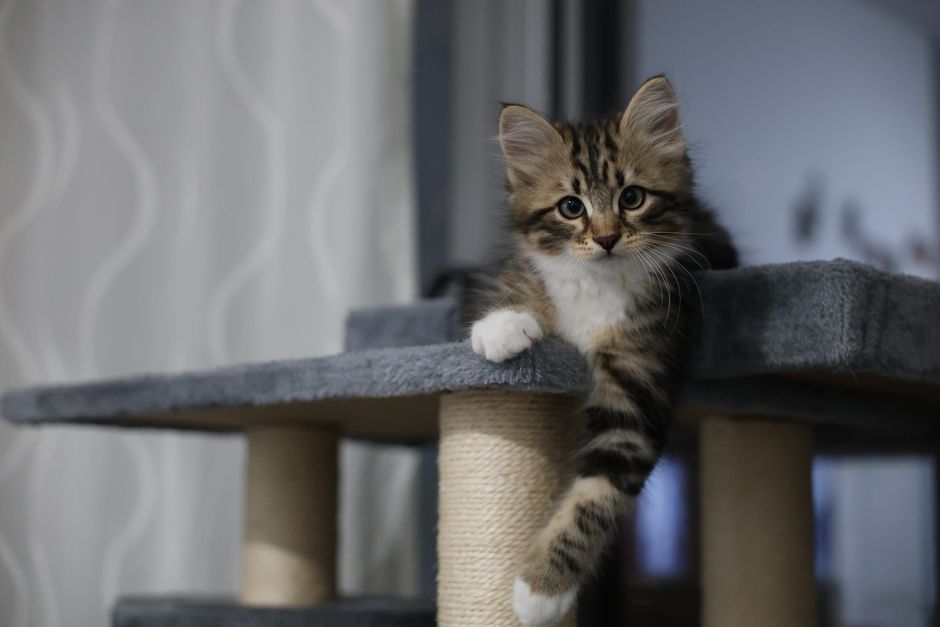
Vertical space is the most important single environmental enrichment element for indoor cats — the elevated positions that cats use for security territory monitoring and the height advantage that their natural behavior prioritizes for safety and observation. Cat trees wall-mounted shelves strategically placed at different heights furniture arrangement that allows safe jumping routes to elevated positions and window perches that provide outdoor observation from safe elevated indoor positions all address the vertical territory need that floor-level-only indoor environments fail to provide.
A cat who cannot access height in their environment is a cat whose fundamental territorial instinct is chronically frustrated — the frustration that anxious behavior and inter-cat conflict in multi-cat households reflect when vertical space is insufficient for all resident cats to establish and use separate elevated positions simultaneously.
Window access provides the passive environmental enrichment that watching outdoor activity delivers — the bird watching small animal observation weather change monitoring and visual environmental novelty that indoor cats can experience through windows without the outdoor exposure that outdoor access would require. Window perches positioned at bird-feeder height when an outdoor bird feeder is placed in the window’s view create the most sustained window engagement available — the wildlife observation that keeps cats entertained for hours with essentially zero ongoing owner effort after initial setup.
Rotating enrichment items address the novelty need that fixed enrichment eventually fails to provide as familiarity reduces stimulation value. A cardboard box introduced one week a paper bag the next and a new toy tunnel the week after that provides novelty that re-engages the exploratory interest that permanent fixture familiarity gradually extinguishes. The enrichment budget required for effective rotation is minimal — cardboard boxes paper bags and simple DIY enrichment items provide the novelty that expensive permanent enrichment fixtures cannot maintain indefinitely.
Hiding and privacy spaces provide the retreat option that cats need for the periodic solitude that their independent nature requires — the enclosed space where a cat can rest unobserved and undisturbed as a voluntary choice rather than because no social space is available. Covered beds enclosed cat trees box hides and dedicated quiet room access provide the privacy dimension that social enrichment alone cannot replace for cats who need both social and solitary time across their daily behavioral cycle.
Dimension 2 — Physical Activity and Play
Physical activity is the dimension of indoor cat wellbeing that is most commonly inadequate in standard indoor cat care — the daily movement and exercise that cats need for healthy weight maintenance joint health and the behavioral satisfaction that physical activity provides for animals whose wild ancestors spent significant portions of each day in active hunting pursuit.
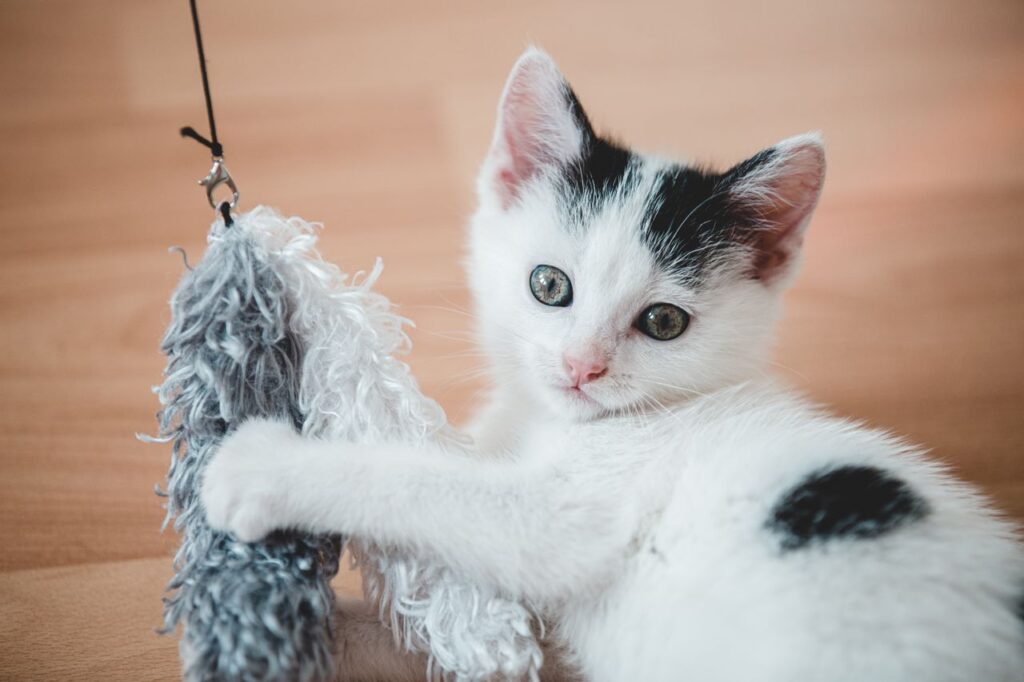
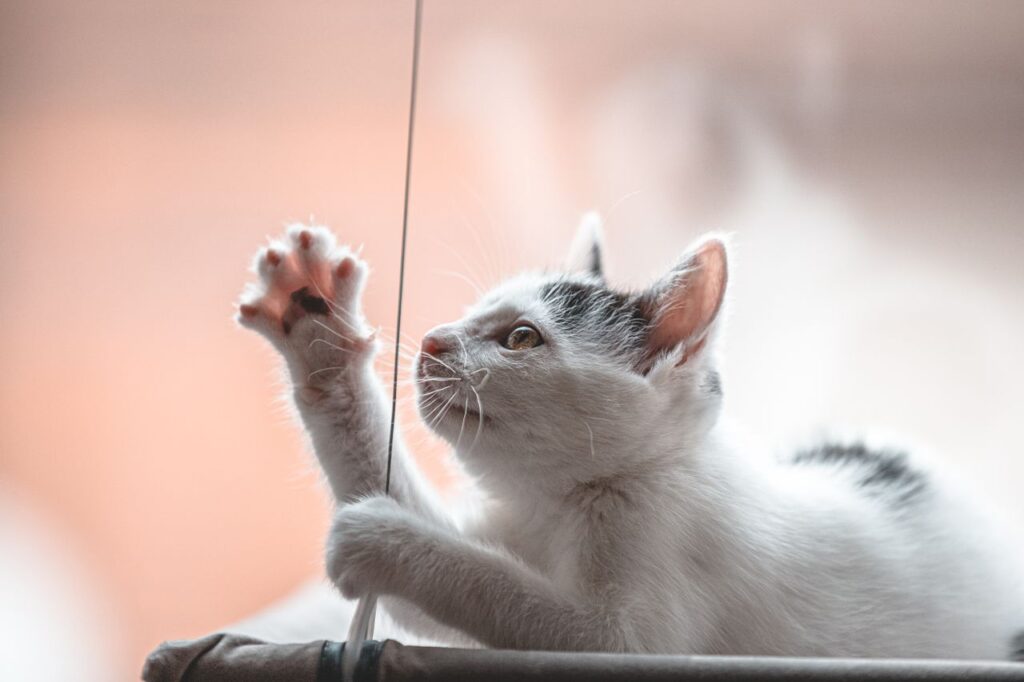
Daily interactive play sessions are the most important single physical activity provision for indoor cats — the human-led play sessions using wand toys feather teasers and prey-movement toys that simulate the hunt-catch-kill-eat sequence cats’ predatory instincts are built around. Twice-daily sessions of 10 to 15 minutes each provide the minimum hunting simulation that indoor cat behavior specialists consistently recommend for most adult cats — the physical exertion and behavioral satisfaction that self-play with stationary toys alone cannot match.
The play session technique that produces the most engaged response mimics genuine prey movement — the unpredictable direction changes speed variation hiding and sudden stillness that actual prey produces rather than the steady back-and-forth movement that uninvested toy waving creates. A 10-minute play session conducted with genuine prey-mimicking technique provides more behavioral satisfaction than a 30-minute session of lazy toy dragging that fails to engage the hunting sequence fully.
Puzzle feeders address both physical activity and mental stimulation simultaneously — the food-dispensing toys that require cats to work for portions of their daily food allocation through batting rolling and problem-solving behaviors that wild cats’ foraging behavior naturally involved. Puzzle feeders slow food consumption reducing the obesity risk that rapid eating creates in sedentary indoor cats while providing the physical and cognitive engagement that straightforward bowl feeding eliminates entirely.
Solo play provision through appropriate toy selection ensures that cats have enriching play options during the significant portions of the day when owners are unavailable for interactive sessions. Crinkle balls small plush mice battery-powered moving toys and the periodic introduction of novel objects provide solo play opportunity that reduces the boredom that insufficient independent play options produces in cats left alone for extended periods.
Dimension 3 — Nutrition for Indoor Cat Health
Indoor cat nutrition requires specific consideration beyond the general cat food quality that any cat care guidance recommends — the caloric and nutritional adjustments that the reduced activity level of indoor life compared to outdoor hunting existence demands for healthy weight maintenance and the specific health conditions that indoor cats face at higher rates than outdoor alternatives.
Caloric management is the most immediately significant nutritional consideration for indoor cats — the sedentary lifestyle that indoor environments naturally produce requiring lower caloric intake than the active outdoor lifestyle that cat food formulations originally calibrated to. Indoor-specific cat food formulations with lower caloric density help prevent the obesity that standard formulations fed at standard quantities consistently produce in sedentary indoor cats over time.
Hydration support is the second most important nutritional consideration for indoor cats — the chronic mild dehydration that many dry-food-fed indoor cats experience contributing to the urinary tract disease that indoor cats face at higher rates than outdoor alternatives. Water fountain provision as covered in our cat water fountain guide the inclusion of wet food in the diet either exclusively or as a supplement to dry food and multiple water source placement throughout the home address the hydration need that indoor cats’ naturally low thirst drive often fails to adequately self-manage.
Life-stage appropriate nutrition ensures that indoor cats receive the specific nutritional profiles that different life stages require — kitten formulations for growth adult formulations for maintenance and senior formulations for older cats whose protein metabolism joint health and organ function needs differ meaningfully from adult cat requirements. Life-stage appropriate feeding is the single most evidence-supported nutritional intervention available for maintaining optimal cat health across the complete lifespan.
Dimension 4 — Social Interaction and Bonding
Cats are more socially complex than their reputation for independence suggests — the domestic cat whose evolution occurred alongside humans having developed social bonding needs that healthy indoor life requires owners to actively fulfill rather than assuming the cat’s independence means social needs are self-met.
Daily owner interaction beyond functional care provision — the deliberate petting grooming play and relaxed companionship time that strengthens the cat-owner bond — is the social enrichment that indoor cats need from their primary human relationships. The cat who receives food water and clean litter but minimal deliberate positive interaction is a cat whose social needs are inadequately met regardless of how well their physical care needs are addressed.
Multi-cat households provide the inter-cat social enrichment that single-cat households cannot — the grooming companionship play and social complexity that same-species interaction delivers for cats whose social nature benefits from feline companionship. Multi-cat households require sufficient vertical space individual resource access and careful compatibility assessment to produce the positive social environment that enriches rather than stresses resident cats — the conditions that make multi-cat housing beneficial rather than the source of chronic inter-cat conflict that inadequately resourced multi-cat environments produce.
Consistent routine provides the predictability that cats’ sense of security depends on — the regular feeding times play session timing and household activity patterns that allow cats to anticipate their day rather than experiencing the chronic uncertainty that irregular schedules produce in animals whose stress response activates readily in the absence of predictable environmental patterns.
Dimension 5 — Medical Care Essentials for Indoor Cats
Indoor cats require the same preventive medical care that outdoor cats need — and in some categories require more consistent care than their lower-risk indoor lifestyle might suggest.
Annual veterinary examinations maintain the health baseline awareness that allows early identification of the conditions that indoor cats develop at significant rates — dental disease obesity urinary tract conditions and the hyperthyroidism that older indoor cats develop at high frequency. Annual examination frequency provides the monitoring interval that catches developing conditions before they reach the advanced severity that more expensive and less effective treatment addresses compared to early-stage intervention.
Dental care is the most consistently neglected medical care element for indoor cats despite dental disease affecting the majority of adult cats by age three — the pain and systemic health effects of untreated dental disease significantly affecting quality of life in ways that pain-masking feline behavior makes invisible to owners who are not actively looking for dental health indicators. Regular dental examinations veterinary cleaning as recommended and at-home dental care through brushing dental treats or water additives address the dental disease burden that indoor cats develop through the same food exposure mechanisms as outdoor alternatives.
Parasite prevention remains relevant for indoor cats despite the reduced exposure that indoor lifestyle provides — fleas transported into the home on owner clothing and through brief outdoor access and intestinal parasites transmitted through contaminated environments remaining realistic exposure sources for cats whose indoor lifestyle eliminates but does not eliminate the need for parasite awareness and appropriate prevention.
Weight monitoring is the medical care element that indoor cat owners most need to actively manage — the sedentary lifestyle and ad-libitum feeding that many indoor cats receive being the combination that produces obesity in the majority of indoor cats whose weight is not actively monitored and managed through appropriate portion control and activity provision.
Creating the Complete Indoor Cat Environment
The complete indoor cat environment that genuinely meets all dimensions of feline wellbeing is not achieved through any single enrichment purchase or care change — it is the cumulative result of deliberate attention to all five dimensions covered in this guide sustained consistently across the cat’s entire indoor life.
The owner who provides excellent environmental enrichment but neglects physical play is meeting some of their cat’s needs while leaving others unmet. The owner who provides excellent nutrition and medical care but insufficient social interaction is similarly providing partial rather than complete indoor cat wellbeing. The complete indoor cat life that genuinely thrives requires all five dimensions addressed adequately — the combination that produces the genuinely happy healthy indoor cat whose lifespan and quality of life both reflect the indoor lifestyle’s full potential.
The indoor cat who receives everything on this list lives a genuinely fulfilled healthy long life that justifies the indoor lifestyle decision completely — the cat whose owner takes the enrichment obligation seriously rather than simply the confinement decision. For the complete evidence behind the indoor vs outdoor decision check out our comparison of indoor cat vs outdoor cat — the honest lifespan and health data that confirms why indoor lifestyle with proper enrichment is the best choice for most cats.
All guidance in this article is based on current veterinary and feline behavior research alongside genuine indoor cat care expertise. For the specific toys that provide the hunting simulation and physical activity that indoor cats need most check out our complete guide to the best cat toys under $50 — the interactive enrichment tools that keep indoor cats genuinely engaged and physically active every single day. For bird owners who share their home with cats check out our complete guide to the best bird cages for small and medium birds in 2026 — the top 5 picks that provide the secure spacious environments that birds need to thrive safely alongside other household pets.
Frequently Asked Questions
Q: How much play does an indoor cat actually need every day?
A: Most adult indoor cats benefit from two interactive play sessions of 10 to 15 minutes each per day — the minimum that provides adequate hunting simulation and physical exertion for behavioral and physical wellbeing. Kittens require significantly more play at higher intensity while senior cats benefit from shorter gentler sessions adjusted to their reduced energy and mobility. The play need is non-negotiable for indoor cats regardless of the owner’s schedule — even 10 minutes of genuinely engaged prey-mimicking play produces significantly better behavioral outcomes than 30 minutes of uninvested toy dragging.
Q: Should I get a second cat to keep my indoor cat company?
A: This depends significantly on your existing cat’s personality and history. Some cats thrive with feline companionship and show clear social enrichment from a compatible companion. Others are genuinely solitary by temperament and find a second cat’s presence stressful rather than enriching. If your cat has previously demonstrated positive social behavior with other cats a carefully matched companion introduced properly can significantly enhance their indoor enrichment. If your cat has consistently reacted negatively to other cats additional human interaction and environmental enrichment are better approaches than a companion who would cause ongoing stress.
Q: My indoor cat seems bored but I cannot afford expensive enrichment products. What can I do?
A: The most effective indoor cat enrichment options are largely free or very low cost. Cardboard boxes paper bags and crinkled paper provide novel exploration objects. Window access with a bird feeder visible outside provides hours of wildlife entertainment at bird seed cost. DIY puzzle feeders from cardboard tubes and egg cartons provide feeding enrichment at zero cost. Paper wand toys made from a stick and ribbon provide interactive play for pennies. The investment that matters most is time — the daily interactive play sessions that no purchased product replaces.
Q: How do I know if my indoor cat is unhappy or under-stimulated?
A: The behavioral signals of indoor cat under-stimulation include excessive vocalization particularly at night redirected aggression toward owners or household objects over-grooming that produces bald patches or skin irritation destructive scratching beyond normal levels and the persistent attention-seeking behavior that insufficient engagement consistently produces. Physical signals include rapid weight gain from inactivity and stress-related health issues including recurring urinary tract problems and skin conditions. Any significant behavioral change warrants veterinary evaluation to distinguish under-stimulation causes from medical causes that require professional assessment.
Q: At what age do indoor cats’ care needs change most significantly?
A: The most significant care need transitions occur at three life stage transitions. From kitten to adult at approximately one year — transitioning from growth nutrition formulations to maintenance formulations and from the very high play energy of kittenhood to the moderate adult play requirement. From adult to senior at approximately 7 to 10 years depending on breed — increasing veterinary monitoring frequency adjusting to reduced activity capacity and monitoring for the conditions that older cats develop at higher rates. And the geriatric transition at 12 to 15 years that requires the most active medical monitoring and comfort-focused care adjustment.
Conclusion
Keeping a cat happy and healthy indoors is one of the most rewarding commitments a cat owner can make — and one of the most fulfilling when done well. The indoor cat who thrives is not the one who is simply kept safe from outdoor risks — it is the one whose owner has genuinely engaged with what that cat needs as a living animal with complex behavioral physical and social needs that an indoor environment must actively address.
Every cat is different in their specific enrichment preferences activity levels and social needs — the general guidance in this guide providing the framework that your observation of your specific cat’s responses and preferences fills with the individual calibration that genuinely personalized indoor cat care requires.
Explore the complete collection of cat care guides and product recommendations at TopPetAccessories.com — Top Pet Accessories Blogs Page — for everything you need to provide the best possible indoor life for your cat.